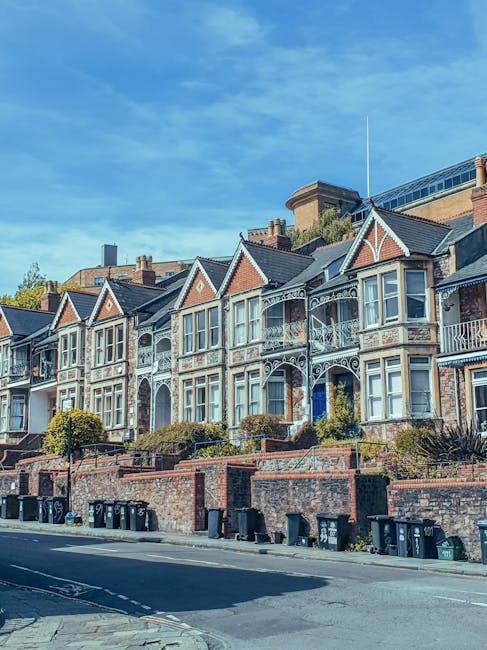
Do I Need a Permit to Move on Rosslyn Hill? NW3 Guide
If you're planning a move on Rosslyn Hill, the first question usually isn't about boxes or bubble wrap. It's this: do I need a permit to move on Rosslyn Hill? In NW3, that question matters because the street layout, parking pressure, and local restrictions can all affect how smoothly moving day goes. A small oversight can turn an otherwise straightforward move into a long, frustrating morning with nowhere to stop the van and a lot of waiting around.
This guide breaks the issue down in plain English. You'll learn when a permit may be needed, what usually affects the decision, how the process tends to work in practice, and what to check before the van arrives. We'll also cover the common mistakes people make, the best way to prepare, and a simple checklist to keep your move calm rather than chaotic. Truth be told, on streets like Rosslyn Hill, a little planning goes a long way.
Table of Contents
- Why Do I Need a Permit to Move on Rosslyn Hill? NW3 Guide Matters
- How Do I Need a Permit to Move on Rosslyn Hill? NW3 Guide Works
- Key Benefits and Practical Advantages
- Who This Is For and When It Makes Sense
- Step-by-Step Guidance
- Expert Tips for Better Results
- Common Mistakes to Avoid
- Tools, Resources and Recommendations
- Law, Compliance, Standards, or Best Practice
- Options, Methods, or Comparison Table
- Case Study or Real-World Example
- Practical Checklist
- Conclusion
- Frequently Asked Questions
Why Do I Need a Permit to Move on Rosslyn Hill? NW3 Guide Matters
Rosslyn Hill sits in a busy part of NW3, where moving day logistics can be more delicate than people expect. Even if you only have a few rooms' worth of belongings, the real challenge is often not the lifting. It's the stopping. It's the loading bay that isn't there. It's the resident permit bay already full. It's the awkward moment when a delivery truck is waiting behind you and the clock is ticking.
A permit or parking authorisation may matter for a move on Rosslyn Hill because moving vehicles are not the same as a normal family car. They are larger, slower to manoeuvre, and need enough space for safe loading and unloading. If you park without checking the rules, you risk fines, delays, or being forced to move the van mid-load. Nobody wants to carry a wardrobe down three flights only to discover the vehicle has to relocate around the corner.
For home moves, the impact is obvious. For business moves, the stakes can be higher still. A late start can affect staff, building access, and the whole day's schedule. That is why services such as home moves and commercial moves often need very careful parking planning in London neighbourhoods like NW3.
In short, the permit question matters because it shapes the whole move: timing, vehicle choice, manpower, and stress levels. And on a road like Rosslyn Hill, those details are not minor. They are the move.
How Do I Need a Permit to Move on Rosslyn Hill? NW3 Guide Works
The exact answer depends on where the vehicle needs to stop, how long it needs to stay, what kind of loading is involved, and what local parking controls apply at that location and time. In practical terms, you are usually looking at three things:
- Parking restrictions on the stretch of road where the van will load or unload.
- Vehicle size, because a larger removal truck may need more space than a smaller van.
- Duration of stay, especially if the move will take longer than a quick drop-off.
If your moving vehicle can legally stop in a place with enough space and there are no restrictions preventing loading, a formal permit may not be necessary. But if the road is controlled, busy, narrow, or limited to residents' bays, you may need permission, a dispensation, or some form of parking arrangement. In many London moves, the key issue is not the word "permit" itself but whether you've arranged lawful access for loading and unloading. People often use the word loosely, so it helps to clarify exactly what the local requirement is.
That's where a professional mover can help. If you're using a man and van or a man with van service, the team can often advise on vehicle fit, access, and timing. For heavier or larger loads, a moving truck or removal truck hire option may make more sense, but it also increases the need to think carefully about parking space and road access.
One useful rule of thumb: if you're asking whether the van can just "pull up for a minute," you should probably check the parking situation more closely. That little minute has a habit of becoming twenty.
Key Benefits and Practical Advantages
Sorting permit issues early does more than keep you legal. It makes the whole moving day behave better. Sounds obvious, but it's the sort of thing people only appreciate once they've spent half an hour circling for a place to stop.
- Less delay - the crew can load and unload without unnecessary interruptions.
- Lower stress - you won't be juggling the van, the keys, the building entrance, and the parking bay all at once.
- Better vehicle choice - once access is clear, you can choose the right size vehicle instead of guessing.
- Reduced risk of penalties - parking properly is always cheaper than dealing with avoidable enforcement issues.
- Safer handling - a stable stopping point means fewer rushed lifts and fewer awkward carries.
There's also a planning benefit that gets overlooked. When parking is settled, packing, labour, and access all become easier to coordinate. If you are still boxing up the kitchen at 8:30 a.m., the last thing you need is a van on double yellows and someone waving from the pavement. A smoother start tends to snowball into a smoother finish.
For households that need extra help beyond the vehicle itself, a service that includes packing and unpacking services can take pressure off the morning. For bulky or awkward items, furniture pick-up can be useful when you are moving out old pieces as well as bringing new ones in.
Who This Is For and When It Makes Sense
This guide is for anyone moving on Rosslyn Hill who wants a practical answer, not vague reassurance. If you live in a flat, a terraced property, or a building with limited frontage, you are especially likely to benefit from checking permit requirements early. The same goes for anyone using a larger vehicle, moving at peak times, or dealing with narrow access.
It makes sense to plan ahead if you are:
- moving house in NW3 and need a van to stop close to the entrance;
- relocating an office and need a scheduled loading window;
- moving bulky items that require more than a quick hand-carry from a side street;
- using a hired truck and want to avoid last-minute parking problems;
- trying to finish the move in one trip rather than making multiple runs.
It is also relevant if you have vulnerable items or a strict timetable. A piano, antique cabinet, or heavy sofa doesn't care that the bay is inconveniently full. It still needs careful handling and a sensible route from property to vehicle. In those situations, a move plan with the right vehicle and access strategy often matters more than people expect.
Commercial clients should think about staff access, customer footfall, and loading times. Residential customers should think about building entry, stairwells, and whether neighbours will need temporary access past the vehicle. These are small details on paper. On the day, they can feel huge.
Step-by-Step Guidance
If you want a straightforward way to handle the Rosslyn Hill permit question, follow this process. It keeps things tidy and avoids the "we'll deal with it on the morning" approach, which rarely ages well.
- Check the exact address and street section. Parking rules can change from one stretch to another. Do not assume the whole road works the same way.
- Look at the size of the vehicle. A small van may fit where a larger truck simply will not. Be realistic here.
- Estimate loading time. A one-bedroom flat move is not the same as moving a family home or an office full of desks.
- Assess access points. Think about stairs, lifts, tight corners, and how close the vehicle needs to be to the entrance.
- Decide whether you need a permit, dispensation, or just lawful loading space. The correct answer depends on the local parking setup and the move itself.
- Book the move with access in mind. If you are using house removalists or arranging office relocation services, tell them about the road conditions early.
- Prepare the property and the route. Clear hallways, protect floors, and make sure the loading area is ready.
- Keep contact numbers and documents handy. If the plan changes, you need to be able to respond quickly. No rummaging through drawers while the van is idling outside.
A small but useful tip: if you're torn between two time slots, the quieter one is often the better bet. Early weekday mornings can be easier than mid-morning rush periods, though local conditions still matter. That bit alone can save a surprising amount of faffing.
Expert Tips for Better Results
Here's the practical stuff people learn after doing a few London moves, or after one particularly annoying one.
- Use the smallest suitable vehicle. Bigger is not always better if parking space is tight.
- Allow buffer time. In areas like NW3, a five-minute delay can become fifteen quickly.
- Measure the route from door to vehicle. If your items need to pass through narrow halls or steps, build that into the plan.
- Coordinate with building management if needed. Some properties have their own loading preferences or access rules.
- Protect parking space early if it is legally available. You do not want to discover the bay has been taken by a delivery van five minutes before arrival.
- Label boxes clearly. It sounds obvious, but when the pavement is busy and the crew is moving fast, clarity saves time.
One more thing. If you have a lot of furniture and a tight window, combining vehicle hire with loading help can be smarter than trying to do everything in one stretched-out session. That's where a service like man and van or dedicated removal truck hire can make the day feel a lot less frantic.
And yes, I know everyone says they'll "just be quick." In moving terms, quick is lovely in theory. In reality, sofas have opinions.
Common Mistakes to Avoid
Most moving problems on streets like Rosslyn Hill are predictable. That's the good news. The bad news is people still make the same mistakes, often because they sound harmless at the planning stage.
- Assuming a permit is not needed because the stop is short. Short does not always mean allowed.
- Booking the wrong vehicle size. A van that is too large can create parking and access headaches.
- Leaving parking checks until moving day. By then, your choices are limited.
- Forgetting loading time. Parking rules often care about how long the vehicle is stationary, not just whether it is moving.
- Not telling the removals team about tight access. They can only plan around what they know.
- Ignoring nearby restrictions. Sometimes the safest legal stop is not directly outside the property, but people forget to check side streets and nearby bays.
Another common slip is underestimating the human side of the move. If you are moving with children, pets, or a mix of fragile and heavy items, you'll want the vehicle plan sorted early so everyone knows where to stand, what to carry, and when. It reduces noise, confusion, and a fair bit of grumbling too.
Tools, Resources and Recommendations
You do not need a mountain of equipment to move well on Rosslyn Hill, but a few practical tools help a lot. These are less glamorous than a shiny new label maker, but more useful on the day.
- Printed moving checklist so you can tick off access, parking, and packing steps as you go.
- Phone notes for arrival times, vehicle details, and contact names.
- Furniture covers and blankets for protecting items during loading.
- Tape, markers, and labels for quick identification of boxes and rooms.
- Measuring tape for checking doorways, stair width, and awkward furniture.
- Access plan showing where the van can stop, where items should be staged, and who is handling what.
If you want support with logistics rather than just lifting, the best choice is often a service that matches the job properly. For household moves, home moves is a useful starting point. If you need more hands for a larger property, house removalists can be a better fit. For moves that involve packing first and unpacking later, the extra coordination can make the difference between a long day and a very long day.
Keep the admin simple. One sheet, one phone folder, one clear plan. That's usually enough.
Law, Compliance, Standards, or Best Practice
For a move on Rosslyn Hill, compliance is mostly about parking law, local restrictions, and safe working practice. The exact requirements depend on the street, the time of day, and the vehicle involved. Because parking rules can change, it is wise to verify the current arrangements before the move rather than relying on assumptions from a previous address or a neighbour's experience.
Good practice in London moving jobs usually includes:
- checking whether the loading area is legally usable at the planned time;
- ensuring the vehicle does not block traffic, driveways, or pedestrian access;
- allowing enough room for safe lifting and movement;
- keeping the move organised so items are not left on the pavement longer than necessary;
- following any property-specific access rules from building managers or landlords.
If you are arranging a commercial move, the same logic applies, but with more people involved. Office buildings often have stricter access windows, security procedures, and lift reservations. That is where careful planning and clear communication really pay off. Not dramatic, just sensible.
Best practice also means using the right service for the job. A small load can often work with a man with van arrangement, while bulkier or more complex jobs may need a larger vehicle and a more structured schedule. If your move includes heavy furniture or removals, align the vehicle choice with the actual street conditions, not with what seems cheapest on paper.
Options, Methods, or Comparison Table
If you are deciding how to handle the move on Rosslyn Hill, it helps to compare the common approaches side by side. The right option depends on property type, volume, access, and how much help you want on the day.
| Option | Best for | Parking considerations | Practical note |
|---|---|---|---|
| Small van / man and van | Light to moderate moves, limited furniture | Usually easier to park and manoeuvre | Good if access is tight and the load is manageable |
| Larger moving truck | Full-house moves, bigger loads, multiple bulky items | Needs more space and more careful planning | Better capacity, but more likely to need parking checks |
| Removal truck hire | Moves where you need dedicated vehicle control | Must be assessed against road width and loading space | Useful for complex or scheduled moves |
| Professional house removalists | Higher-value or more demanding residential moves | Team can plan access and loading order | Helpful when the move is large, delicate, or time-sensitive |
A quick comparison like this is often enough to show why permit planning matters. A small van may slip into a spot more easily, while a truck might need extra preparation or a different stop point altogether. If you've ever watched a driver reverse into a narrow London street at 7 a.m., you'll know what I mean. It's not the moment for improvisation.
Case Study or Real-World Example
Imagine a couple moving from a top-floor flat on Rosslyn Hill to a new place a few miles away. They have a sofa, a bed frame, several heavy boxes, and a fairly tight handover window. At first, they assume the van can park directly outside for an hour or two. Simple enough, right?
Then they notice the street is busy and the nearest legal stopping space is not where they expected. A larger vehicle would fit the load better, but not the bay. A smaller vehicle would fit the bay better, but might mean more trips. They pause, reassess, and choose a van size that balances access and capacity. They also make sure the loading area is clear before the crew arrives.
On the day, the move goes more smoothly because the parking question was solved beforehand. The team loads in a steady rhythm, the boxes are labelled, and nobody is standing around wondering whether a ticket is about to appear on the windscreen. It is a simple example, but it happens all the time. The difference between a stressful move and a manageable one is often just a few sensible decisions made early.
The same principle applies to businesses. A small office relocating on a weekday morning may need access for furniture, computers, and filing cabinets. If the team has pre-booked the right vehicle and aligned the access plan, the process feels controlled rather than improvised. That calm is worth a lot.
Practical Checklist
Use this checklist before moving day. It is intentionally simple. That's the point.
- Confirm the full Rosslyn Hill address and exact loading point.
- Check whether parking restrictions apply at your planned time.
- Decide if you need a permit, loading arrangement, or a different vehicle.
- Choose the right moving service and vehicle size.
- Tell the mover about stairs, lifts, narrow access, or any building rules.
- Reserve or protect the space if that is part of the lawful setup.
- Pack and label boxes clearly.
- Keep fragile items separate and easy to identify.
- Clear corridors, entrances, and doorways before the crew arrives.
- Have contact numbers ready for the driver, building manager, and anyone else involved.
- Build in spare time for delays, traffic, or access issues.
- Check the weather, because yes, even a light drizzle changes the mood of a move in London.
If you can tick these off calmly, you are already ahead of the game. Really.
Conclusion
So, do you need a permit to move on Rosslyn Hill? The honest answer is: possibly, depending on the exact parking situation, vehicle size, and loading setup. What matters most is not guessing. It is checking the access properly and matching the move plan to the realities of NW3.
If your move is small and access is straightforward, the process may be simple. If the vehicle is larger, the property is awkward, or the road is busy, then parking permission or an alternative loading plan becomes much more important. Either way, the smartest move is to treat the permit question as part of the moving plan, not an afterthought.
Get the parking right, and the rest has room to breathe. That's usually the difference between a day you remember for all the wrong reasons and one that just quietly gets done.
Get a free quote today and see how much you can save.
Frequently Asked Questions
Do I need a permit to move on Rosslyn Hill if the van is only there for a short time?
Not necessarily, but short stops are not automatically allowed. You still need to check the parking restrictions on the exact section of Rosslyn Hill and make sure the vehicle can stop legally for loading or unloading.
Is a permit the same as a parking suspension or loading dispensation?
Not always. People often use the word "permit" as a catch-all, but in practice the required arrangement may be a permit, a loading allowance, a dispensation, or another local parking approval. The exact term depends on the local rules.
Can a man and van service help with the permit question?
Yes, a good man and van or man with van service can usually help you think through access, vehicle size, and timing. That doesn't replace checking the rules, but it does help avoid silly mistakes.
What if I'm moving from a flat with tight access?
Then you should check the parking and loading setup early. Flats often involve stairs, shared entrances, and limited stopping space, so planning ahead matters more than people expect.
Does a larger moving truck make a permit more likely?
Often, yes. A larger vehicle usually needs more room to stop safely and may be harder to place on a narrow road. It doesn't guarantee a permit is needed, but it does make parking checks more important.
Should I arrange parking before I book the movers?
Ideally, yes. At the very least, you should understand the parking situation before confirming the final vehicle size or time slot. It saves rework later, and a lot of headache.
What happens if I guess and there is no valid stopping space?
You may face delays, fines, or the need to move the vehicle partway through the job. That can slow everything down and make handling heavier items more difficult.
Is Rosslyn Hill more difficult for moving than a typical side street?
It can be. Busy London roads often have more traffic, more competition for space, and more restrictions than quieter residential streets. The exact situation depends on the time of day and the section of road, but caution is sensible.
Can furniture pick-up jobs need the same parking checks?
Yes, especially if the item is large or the collection point is on a controlled street. A single sofa still needs a lawful place to stop, and a quick pickup can still become a parking problem if it isn't planned.
What is the best vehicle choice for a small NW3 move?
If the load is modest, a smaller vehicle is often easier to manage on tight London roads. For bigger loads, a larger truck may be more efficient, but only if the road and parking setup can support it.
Do office moves on Rosslyn Hill need extra planning?
Usually yes. Office relocations often involve strict timing, more items, and building access considerations. For that reason, office relocation services can be particularly useful where parking and access need to be organised carefully.
What should I do if I'm still unsure about the permit requirement?
Treat it as a planning issue, not a guess. Check the exact address details, consider the vehicle size, and speak to the moving provider before the day arrives. If you need a more structured household move, home moves or house removalists can help you organise the job properly.
Can packing help reduce permit-related stress?
Absolutely. If everything is boxed, labelled, and ready to go, the loading time is usually shorter and more predictable. That can make parking easier to manage and the whole move feel less pressured. Sometimes the boring prep is the clever bit.